









- Home Improvement
- Art and Decor
- Art and Design
- Blog
- Decorating Tips
- Design
- Design and Architecture
- Design Concepts
- Design Principles
- Design Services
- Design Styles
- Design Technology
- Dining Chair
- DIY Home Projects
- Furniture and Decor
- Furniture Design
- Home & Garden
- Home & Living
- Home and Garden
- Home Decor
- Home Decoration
- Home Design
- Interior Design
- أثاث وديكور
- الأثاث
- تصميم
- تصميم داخلي
- ديكور المنازل
- ديكورات منزلية
Curtains and Fabric Selection Guide: Transform Your Home with the Right Textiles
Understanding the Importance of Curtains and Fabrics
Curtains and Fabric Selection play a vital role in interior design, influencing both the aesthetics and functionality of a room. Curtains and fabrics serve as essential elements in home decor, offering numerous advantages that can transform a living space. One of their primary roles is light control. Through various fabric weights and opacities, these textiles can regulate the amount of natural light entering a space, creating either a bright, airy environment or a cozy, dim atmosphere as desired.
Another critical function of curtains is ensuring privacy. Fabrics that are thick or lined can provide a shield from the outside world, making residents feel secure within their homes. This aspect is particularly significant for urban dwellers who may live in close proximity to their neighbors. Additionally, curtains also play a vital role in insulation. Heavy drapes can regulate indoor temperatures, keeping the warmth in during colder months and blocking out heat in the summer, thereby contributing to energy efficiency.
The selection of fabric also has an undeniable impact on the overall vibe of a space. Different textiles can evoke various emotions and atmospheres; for example, soft linen can create a light, airy feel, while rich velvet can add a sense of elegance and drama. By carefully selecting fabrics that complement existing decor styles, homeowners can enhance the visual appeal and harmony of their interiors. Overall, the importance of choosing the right curtains and fabrics cannot be overstated, as they play a fundamental role in shaping the experience of any given space.
Types of Curtain Fabrics and Their Characteristics
Curtains and Fabric Selection play a vital role in enhancing the aesthetics of a home, and Curtains and Fabric Selection significantly impact the overall ambiance of any space. Choosing the right Curtains and Fabric Selection is essential because fabric type directly affects light control, privacy, and interior style.
There are several types of curtain fabrics, each with its unique properties and characteristics. Understanding these fabrics helps in making better decisions when it comes to Curtains and Fabric Selection for different rooms in the home.
Cotton is one of the most popular choices for curtains due to its versatility and ease of care. It is durable, easy to maintain, and can be found in various styles and patterns, making it suitable for informal and formal settings alike. Cotton curtains are excellent for living rooms or bedrooms, where they can allow natural light while providing a degree of privacy.
Linen, known for its sophisticated look, is another excellent fabric option. This natural fiber drapes beautifully, offering a light and airy feel. However, it tends to wrinkle more easily than cotton. Linen curtains can be an ideal choice for dining areas or sunrooms, where an elegant, relaxed atmosphere is desired.
For those seeking luxury, silk fabric is a top contender. Silk curtains exude opulence and shimmer, making them suitable for formal spaces or bedrooms. However, they typically require more care and may fade if exposed to direct sunlight for prolonged periods.
Polyester is a practical alternative, often chosen for its affordability and durability. This synthetic fabric is resistant to wrinkles and shrinking, making it easy to maintain. Polyester curtains can be used in various rooms and are particularly well-suited for children’s spaces due to their durability.
Additionally, other fabric options such as velvet and blackout curtains serve specific purposes, providing either rich texture or enhanced light-blocking capabilities. Choosing the right fabric depends on the intended use and the desired style, ensuring that each curtain not only complements the room’s design but also fulfills its functional requirements.
Choosing the Right Style and Length for Your Curtains
Curtains and Fabric Selection is essential when it comes to selecting the right curtains, as Curtains and Fabric Selection directly influences your home’s overall aesthetic and interior style. Understanding Curtains and Fabric Selection helps you choose the most suitable styles and lengths to enhance any living space.
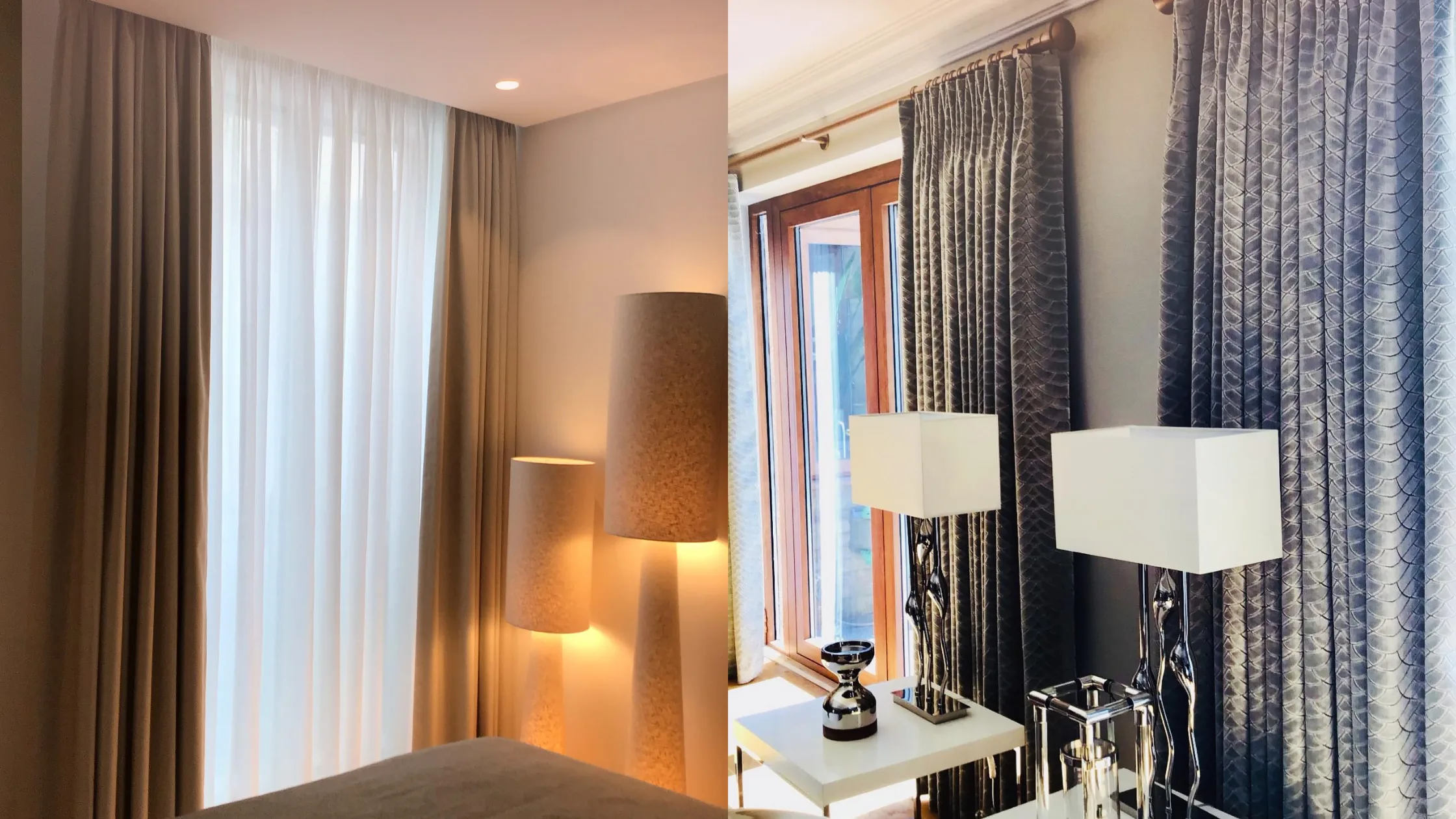
From panel curtains to sheer curtains and valances, each style holds unique characteristics that cater to different interior design themes. Panel curtains, typically heavier and available in a multitude of colors and fabrics, can offer both functionality and elegance. Sheer curtains, on the other hand, are lightweight and ideal for allowing natural light to filter through while retaining privacy. Valances serve as an excellent choice for adding a decorative flair above your window treatments.
The length of your curtains also plays a significant role in their overall impact. For standard ceiling heights, panel curtains that extend to the floor are often recommended, creating an illusion of height in a room. For spaces with lower ceilings, consider curtains that end just above the window sill. If you have tall ceilings, floor-to-ceiling curtains can dramatically enhance the verticality of the space. Furthermore, it is important to measure your window size accurately; a general rule is to multiply the width of your window by 1.5 to 3 times for fullness.
Matching the style of your curtains with your home’s interior design can further unify the decor. For traditional settings, opt for heavy drapes in rich fabrics, while contemporary spaces may benefit from minimalist sheer options. Play with color and texture to create cohesiveness throughout your home. Ultimately, the right selection of curtains can significantly transform your living environment, adding both style and functionality. By taking into consideration the style, length, and how they relate to your overall interior scheme, you can ensure that your curtains complement rather than compete with your home’s design.
Tips for Mixing and Matching Fabrics and Patterns
Curtains and Fabric Selection plays a key role in creating a cohesive interior design with fabrics and patterns. Curtains and Fabric Selection should be guided by essential design principles such as color theory, scale, and texture. Using Curtains and Fabric Selection correctly helps achieve a harmonious and balanced look in your space while still allowing creativity to shine.
Understanding these concepts ensures that your overall Curtains and Fabric Selection supports a well-designed and visually appealing interior.
Firstly, consider color theory when selecting fabrics. Aim for a color palette that complements existing decor. Using the color wheel can guide you in finding harmonious combinations, such as analogous colors (those next to each other on the wheel) or contrasting shades (colors opposite each other). A neutral base can stabilize vibrant patterns and colors, while adding splashes of jewel tones or pastels can elevate the overall aesthetic.
Secondly, scale is crucial when mixing different patterns. A general rule to follow is to vary the scale of the patterns you choose. For example, pairing a large floral print with a small geometric pattern can create a striking balance. This technique prevents visual clutter and encourages interest in your textile arrangement. For instance, large-scale curtains can work wonderfully with smaller accent pillows or a streamlined area rug.
Texture is another important aspect of fabric selection. Utilizing different textiles can add depth to your design. Consider the interplay between smooth, sleek fabrics like silk or satin, and textured materials such as linen or velvet. Blending these textures not only enhances tactile sensation but also enriches the aesthetic appeal of your space.
Curtains and Fabric Selection is the final and most important step when creating a cohesive interior design. Curtains and Fabric Selection can be greatly improved by creating a mood board to visualize your fabric choices before making final decisions. This visual tool helps guide your Curtains and Fabric Selection process by highlighting the synergy between colors, patterns, and textures.
Successful Curtains and Fabric Selection often includes pairing muted tones with bold prints or introducing a single dominant pattern surrounded by complementary solids. By applying these Curtains and Fabric Selection principles, you will be well on your way to mastering the art of mixing and matching fabrics and patterns.
Explore more expert tips on Curtains and Fabric Selection to transform your home interior today!