




3D Visualization in Interior Design: Realistic Designs Before You Build
Understanding 3D Visualization in Interior Design
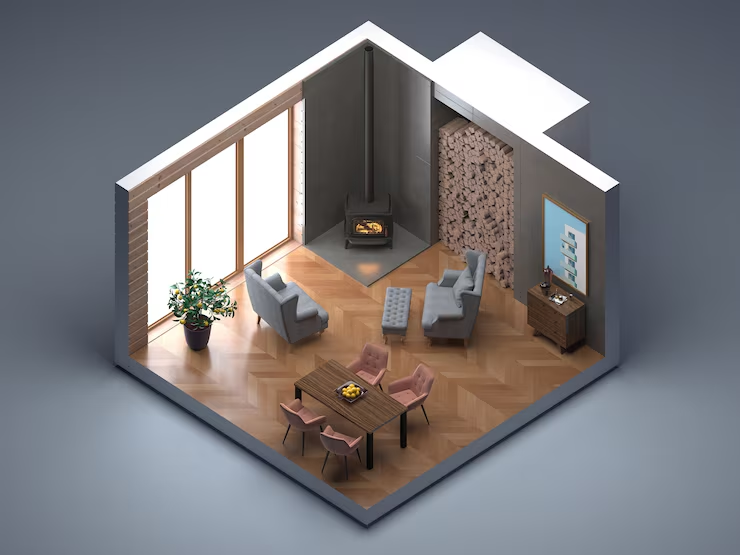
3D visualization in interior design refers to the use of advanced software tools to create realistic, three-dimensional representations of spaces and environments. This innovative approach allows designers to present their ideas clearly and effectively, enabling clients to grasp concepts that might be challenging to articulate through traditional methods. Unlike 2D designs, which rely on floor plans and sketches that can be difficult to interpret, 3D modeling immerses viewers in a simulated space, providing a comprehensive understanding of the potential design.
The process of 3D modeling involves creating a digital representation of an interior space using specialized software. Designers can manipulate various elements, including dimensions, colors, textures, and lighting, ultimately producing high-quality visualizations that closely resemble the final product. This technology not only enhances the design process but also streamlines communication between clients and designers, allowing for clearer feedback and collaboration.
One of the key benefits of incorporating 3D visualization into interior design is the enhanced ability to visualize space before physical development begins. Clients can explore different design options, from choosing color palettes to experimenting with layout configurations, and see how these choices will impact the overall aesthetic. This foresight helps reduce the likelihood of costly errors during the construction phase, as clients can request adjustments in advance rather than post-construction. Additionally, 3D visualization fosters creativity by enabling designers to experiment with innovative concepts and styles—an advantage not readily available with 2D sketches.
In summary, 3D visualization is an essential tool in modern interior design, transforming how professionals communicate ideas and clients experience their future spaces. The shift from traditional design methodologies to 3D modeling enhances accuracy and fosters collaborative relationships, ultimately leading to more successful design implementations.
The Technology Behind 3D Visualization
3D visualization in interior design is powered by a range of sophisticated software and tools that allow designers to create photorealistic representations of spaces before they are built. Prominent software options include AutoCAD, SketchUp, and Revit, each offering unique features tailored to the needs of designers. AutoCAD is renowned for its precision in drafting and detailed architectural drawings, making it an industry standard. SketchUp, known for its user-friendly interface, provides designers with the ability to rapidly prototype ideas and visualize them in 3D. Revit stands out for its Building Information Modeling (BIM) capabilities, which facilitate collaborative work and comprehensive project management.
In addition to traditional software, various rendering tools exist to enhance the visual quality of designs. Programs such as V-Ray and Lumion enable designers to produce high-quality renders, complete with realistic lighting, shadows, and materials. These tools make it possible for clients to see how elements like colors, textures, and furnishings will appear in a physical environment, thereby aiding decision-making processes.
Recent advancements in technology have also introduced immersive experiences through virtual reality (VR) and augmented reality (AR). With VR, clients can don headsets that transport them into lifelike renderings of their future spaces. This immersive experience enables clients to walk through and interact with designs in real-time, providing a unique and engaging way to evaluate choices. On the other hand, AR uses smartphone or tablet screens to superimpose virtual designs onto real-world environments, allowing clients to visualize changes in their actual settings. These innovative technologies are revolutionizing the field of interior design, paving the way for a more interactive and intuitive design process.
Benefits of 3D Visualization for Homeowners and Designers
3D visualization has transformed the landscape of interior design, offering significant benefits for both homeowners and designers alike. By utilizing advanced rendering software, homeowners are presented with a clear representation of their future spaces, allowing them to interact with the design concepts in a meaningful way. This interactive visualization enables clients to understand spatial relationships, colors, materials, and lighting more effectively than traditional 2D drafting methods ever could.
For homeowners, one of the primary advantages of 3D visualization is the enhanced ability to make informed decisions. As they can see a realistic depiction of the space, it reduces ambiguity and facilitates discussions regarding preferences and desires. Embracing this technology leads to fewer revisions, as clients can identify potential issues or adjustments early in the design process. Consequently, this not only fosters a more satisfying outcome but also promotes a stronger relationship between homeowners and designers.
From a designer’s perspective, the benefits of 3D visualization are equally compelling. This technology streamlines the design process, saving valuable time that can be dedicated to other areas of the project. Furthermore, by efficiently showcasing their designs using 3D renderings, designers can enhance their marketing strategies. High-quality visualizations make it easier to attract potential clients, as stunning imagery can convey their vision much more powerfully than verbal descriptions alone.
Additionally, 3D visualization can often lead to cost savings for designers. By identifying material costs and design flaws in the early stages, they can create accurate budget estimates, avoiding unexpected expenses later on. Overall, this integration of technology is advantageous for both homeowners looking to visualize their dream spaces and designers striving for efficiency and effective communication.
Future Trends in 3D Visualization and Interior Design
The future of 3D visualization in interior design is set to be dramatically transformed by several emerging trends and technologies. One notable advancement is the integration of artificial intelligence (AI) into the design process. AI algorithms are increasingly capable of analyzing vast amounts of design data to provide insights that can enhance the design workflow. This includes generating design suggestions tailored to individual client preferences, automating repetitive tasks, and providing real-time feedback, thereby streamlining the creative process for designers.
Furthermore, the demand for customizable design options is on the rise, driven by clients seeking personalized spaces that reflect their unique tastes and lifestyles. 3D visualization tools are evolving to incorporate user-friendly interfaces that allow clients to modify designs effortlessly. This shift towards customization not only enhances client satisfaction but also empowers designers to offer tailored solutions that align with specific requirements.
Another significant trend is the growing emphasis on sustainability in interior design. Designers are increasingly considering the environmental impact of materials and processes used in their projects. This has led to the development of advanced visualization techniques that prioritize sustainable practices, enabling designers to showcase eco-friendly alternatives within their models. By utilizing 3D visualization to highlight sustainable options, designers can educate clients on the benefits of making environmentally conscious choices.
To remain competitive in this rapidly evolving market, interior designers must continuously adapt and embrace these trends. Staying informed about new technologies, engaging in professional development, and experimenting with innovative design tools will be essential. By doing so, designers can not only remain relevant but also position themselves as leaders in an industry that is embracing the balance between creativity, customization, and sustainability. As 3D visualization technology continues to advance, the possibilities for interior design will expand, leading to ever more innovative and realistic design outcomes.
Contact us to see your interior designs in stunning 3D today
Experience your dream space before it’s built – Get 3D Visualization now